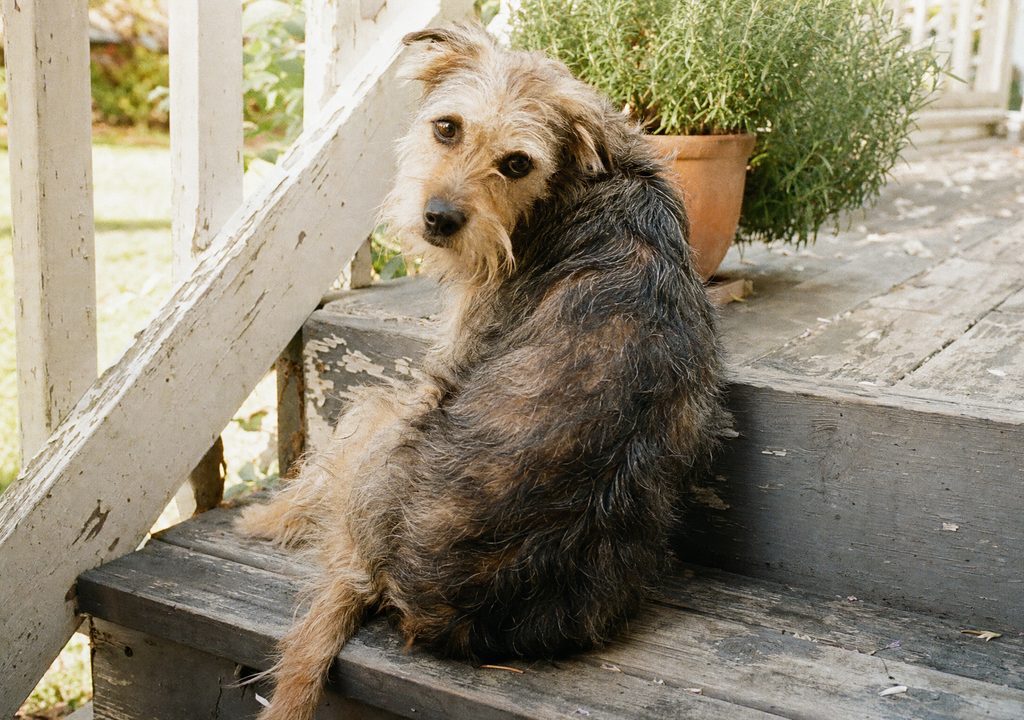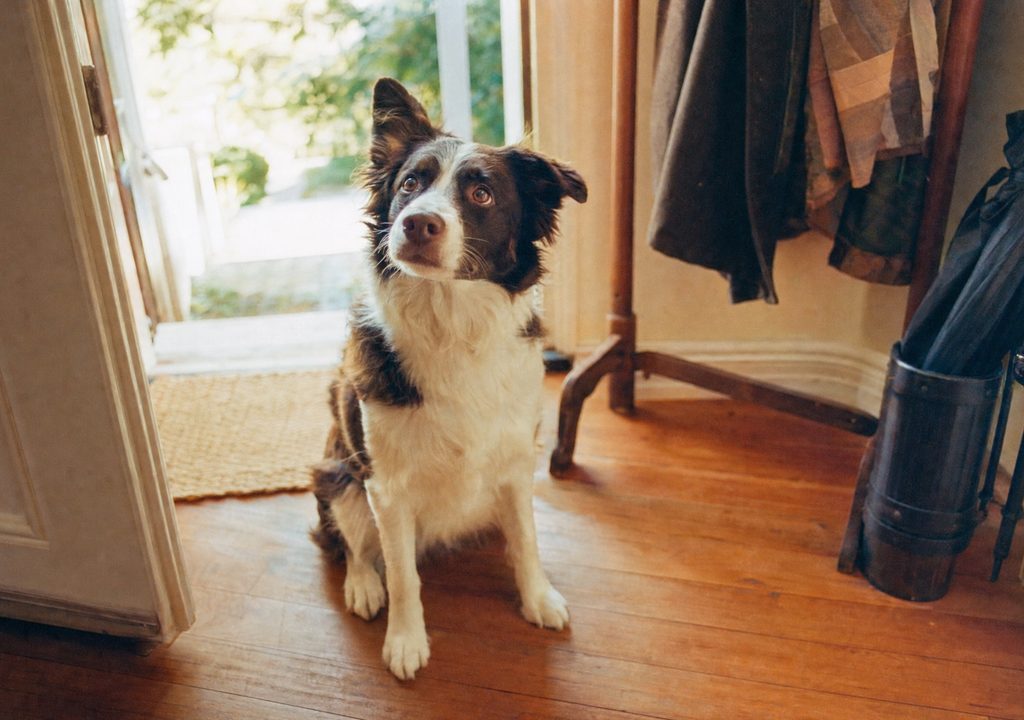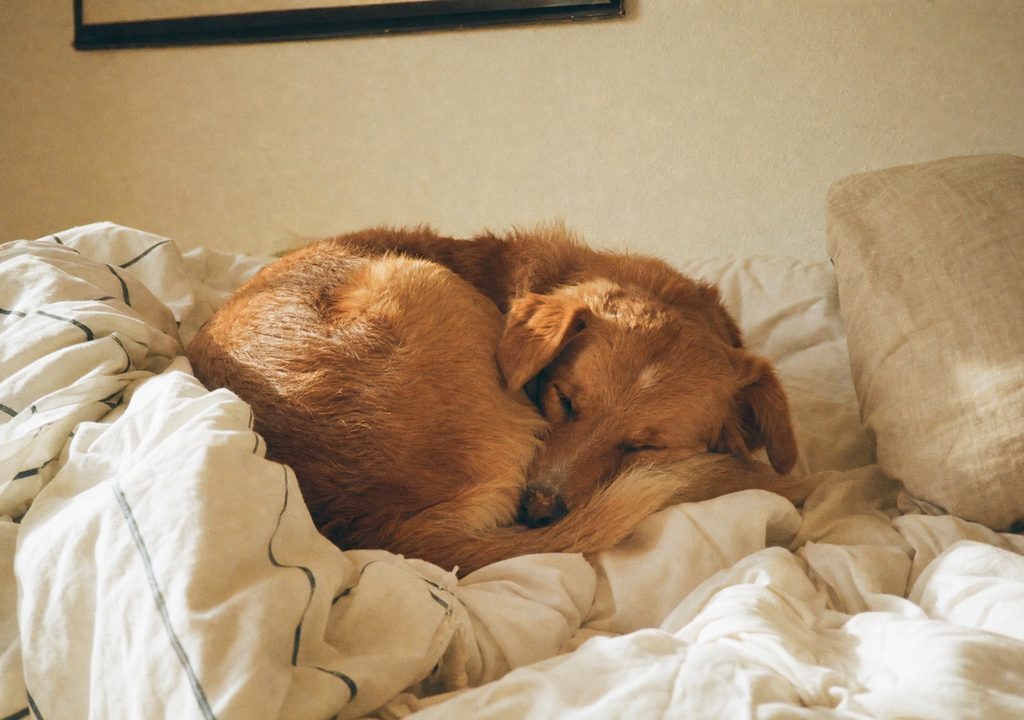
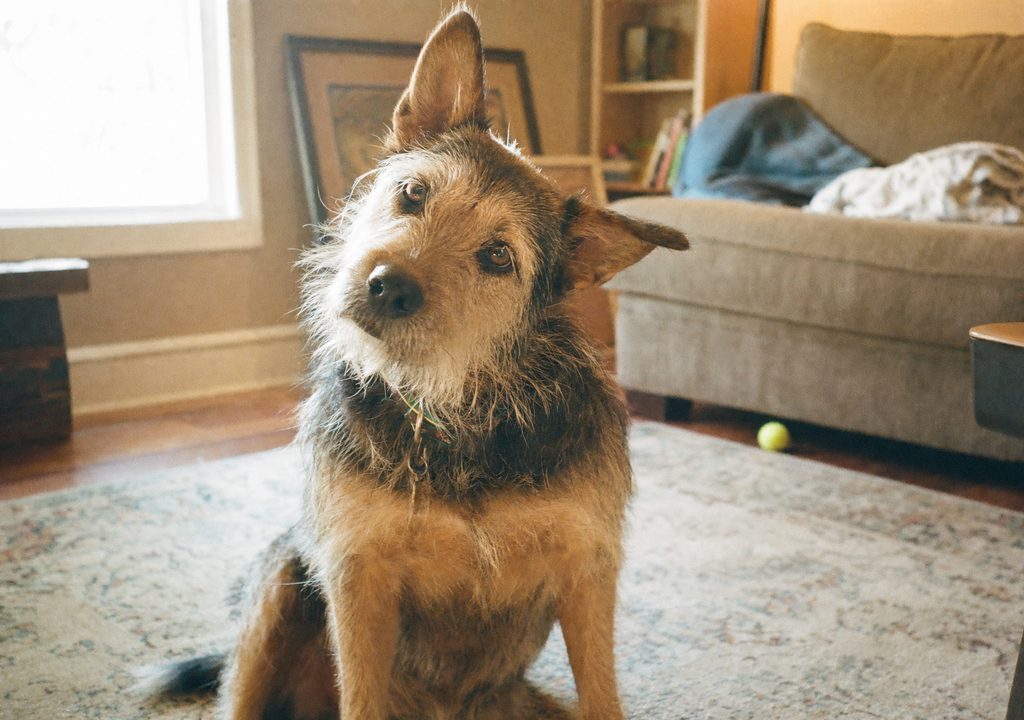
The best evidence says a head tilt is your dog concentrating on a word they recognise — not working out where a sound came from. A brief tilt that comes and goes is normal. A tilt they hold while standing still, with one ear always lower, is a medical sign and needs a vet.
My dog has a tell. Say "walk" in a slightly interested voice and her head swings about thirty degrees to the left — always the left — and parks there while she works out whether I meant it.
Search for why dogs do this and you'll get the same answer nearly everywhere: they're tilting to pinpoint the sound. It's on hundreds of sites. It's also the explanation with the thinnest evidence behind it, and the one study that actually tested it found the opposite.
So here's what the research genuinely shows, which theory survives contact with it, and — the part that matters far more than any of it — how to tell the charming kind from the kind that means pick up the phone.
What the Research Actually Found
There's really only one study aimed squarely at head tilting. A team at Eötvös Loránd University in Budapest — Sommese, Miklósi, Pogány, Temesi, Dror and Fugazza — published it in Animal Cognition in 2022, and it's worth knowing what they did, because it's narrower than the headlines suggested.
They went back through video of dogs doing object-label tests. Owner in one room, toys in another, owner asks the dog to fetch a specific toy by name. Coders marked every time a dog tilted its head between the owner starting to speak and the dog heading off.
Forty dogs. Thirty-three were ordinary family dogs. Seven were what the researchers call "gifted word learners" — dogs who'd demonstrably learned a pile of toy names.
The gap was enormous. The gifted dogs tilted in 43% of trials. The typical dogs managed 2%. That's not a rounding difference.
Two other findings matter. Individual dogs were strikingly consistent about which way they tilted — the same dog tilted the same direction across tests spanning roughly two years. And tilt direction had no relationship to where the owner was standing. None. The statistics weren't close.
Now the caveats, which the authors put front and centre themselves. Seven dogs is a tiny sample. All six used in the direction analysis were Border Collies. It's one task in one context, and they titled the paper "an exploratory analysis" for a reason. Co-author Andrea Temesi put it plainly: it's important to refrain from thinking that only gifted word learner dogs tilt their heads.
So: the strongest signal we have points at concentration on a meaningful word. Not confusion, not sound-finding. Your dog has heard something they know and they're locking on — which is roughly what's happening when they stare at you from across the room, just with the head involved.
Why "Finding the Sound" Doesn't Hold Up
This is the explanation you'll read most often, and I've repeated it myself in the past. The idea is tidy: tilting swivels the outer ears, the ears triangulate, your dog locates the noise.
The problem is that the one study in a position to test it found tilt direction was completely unrelated to where the sound was coming from. If dogs tilted to locate their owner's voice, you'd expect the tilt to track the owner's position. It didn't — not in any of the three experiments.
There's a second study people reach for here, and it doesn't help either. Guérineau and colleagues measured how precisely dogs can locate a sound, published in Veterinary Sciences in 2022. The answer: a minimum audible angle of about 7.6 degrees, which is considerably coarser than humans manage. Interesting on its own terms. But the dogs were tested with their heads deliberately held still, using a headrest. A study that prevents head movement cannot tell you what head movement accomplishes.
The researchers do float the idea that ear movement might help, especially in erect-eared breeds — but they say outright that they didn't test it. It's been shown in cats. In dogs it's a hypothesis someone still needs to run.
Jill Goldman, a certified applied animal behaviorist, lands in the same place when the AKC asked her: she believes it's about getting refinement on what's being said, rather than where it's coming from.
That's the thing to take away. "Dogs tilt to locate sound" is the most repeated claim about this behaviour and currently the least supported.
The Muzzle Theory, and What It Rests On
The other popular explanation: a long snout blocks the bottom of your dog's visual field, so tilting shifts it out of the way and gives them a clear look at your face. Dogs read our expressions closely, so there's a sensible mechanism here.
It traces back to Stanley Coren, writing in Psychology Today in 2013. He surveyed 582 dog owners, asking how often their dog tilted, and had owners of mixed breeds pick their dog's head shape from photos. Flat-faced dogs: 52% reported frequent tilting. Long-muzzled dogs: 71%.
Suggestive. But I'd be overselling it if I called it a study in the way the Budapest work is a study. It was an informal online survey on a blog, not peer-reviewed. Coren describes the difference as statistically significant but publishes no test, no p-value, no confidence interval. Head shape was judged by owners from pictures. Nothing controlled for breed, age or training history.
Coren himself called it a first step, and said the earlier version of the idea had been simply speculation. That's a fair description of where it still sits — plausible, unproven, and routinely cited online as though it were settled.
Why Some Dogs Tilt Constantly and Others Never
This is the question I actually get asked, usually by someone slightly offended that their dog doesn't do it.
Part of it is probably you. Goldman's suspicion is that it happens more in some dogs because it gets reinforced — your dog tilts, you light up and make a delighted noise, and your dog files that away. Nobody has tested this properly, but anyone who has ever said "awwww" at a tilting dog can see how it would work.
Part of it is just the dog. Ellen Lindell, a board-certified veterinary behaviorist, is refreshingly direct about it: some dogs offer head tilts more than others, but it's not clear yet why. That's the honest state of the field.
And if your dog never tilts, nothing is wrong. Typical family dogs in the Budapest study tilted in 2% of trials. One of the seven gifted dogs — a dog who had learned dozens of toy names — never tilted at all.
Here's how the four explanations actually stack up:
| Explanation | What backs it up | Verdict |
|---|---|---|
| Processing a word they know | 43% vs 2% in a controlled comparison | Best supported, but a small sample |
| Locating the sound | Tilt direction unrelated to speaker position | Contradicted where it's been tested |
| Seeing past the muzzle | One informal owner survey, no statistics | Plausible, unproven |
| You reward it by reacting | Expert hypothesis only | Untested, and fits alongside the others |
When a Tilt Isn't Curiosity
This is the section I'd keep if you forget everything else on this page.
There are two different things that both get called a head tilt, and confusing them is how a treatable problem goes unnoticed for weeks.
A curious tilt is behavioural. It's brief, it's triggered by something — a word, a sound, a crinkling bag — and the head returns to level afterwards. Lindell describes it as short, and usually paired with an expression she'd simply call curiosity.
A true head tilt is postural. Your dog holds it. One ear sits lower than the other while they're just standing in the kitchen doing nothing in particular. There's no trigger, because it isn't a response to anything — it's a sign that the system keeping your dog level isn't working properly.
The test is easy: watch your dog when nothing is happening. A curious tilt disappears. A true one doesn't.
The usual cause is the vestibular system — the inner-ear apparatus handling balance and spatial orientation. Michelle Carnes, a veterinary neurologist writing in Today's Veterinary Practice, puts it plainly: the primary reason for a dog to show a head tilt is vestibular dysfunction.
We have good numbers on how often this happens, from a VetCompass study of 905,544 dogs across UK practices. In one year there were 759 cases of vestibular disease — roughly 8 dogs in every 10,000. The median age at diagnosis was 12.7 years, so this skews heavily towards older dogs. Among those cases, head tilt showed up in about 70%, involuntary eye flicking in 68%, and wobbliness or unsteadiness in 64%.
Breed matters more than I expected. Compared with crossbreeds, French Bulldogs were around nine times more likely to be affected, and Bulldogs more than six times.
One more thing worth knowing, because it's genuinely reassuring: in that dataset, dogs who improved typically started improving within about four days. A sudden, dramatic head tilt in an older dog is frightening to witness and often isn't the catastrophe it looks like. But that's a judgement for your vet to make, not for you on the internet at 11pm.
When to Call Your Vet
Call the same day if the tilt is held rather than brief, or if any of these are happening alongside it:
- Eyes flicking back and forth or up and down on their own
- Stumbling, circling, leaning or falling toward one side
- Vomiting or nausea, or going off food
- One side of the face drooping, or a drooping eyelid and small pupil on one side
- Seeming dull or confused rather than their normal self
- Weakness in the legs on one side
- Any sudden head tilt in an adult dog, even without the above
That last one deserves emphasis. Lindell's rule of thumb is that genuinely new behaviours don't just appear in a dog over about eighteen months old unless something new is causing them — so a tilt that wasn't there last month is worth a look regardless of how well your dog seems otherwise.
Ear infections reaching the middle or inner ear are a common and very treatable cause, and an eardrum that looks intact doesn't rule it out. That's a strong argument for going in rather than waiting it out.
Frequently Asked Questions
Does a head tilt mean my dog is smart?
No. The study everyone cites for this compared seven "gifted word learner" dogs against thirty-three typical family dogs, and the authors specifically warned against concluding that only clever dogs tilt. It's a correlation in a very small sample, not a canine IQ test.
My dog never tilts their head. Is something wrong?
Not at all. In that same study, typical family dogs tilted in only about 2% of trials, and one of the gifted dogs never tilted once. Plenty of bright, happy dogs simply don't do it.
Does the direction my dog tilts mean anything?
Individual dogs are remarkably consistent - the same dog tends to tilt the same way for years. But no overall left or right bias has been found across dogs, and nothing links tilt direction to which side of the brain is working, despite how often you'll read that.
How do I tell a normal tilt from a medical one?
Watch your dog when nothing is happening. A curious tilt is brief, triggered by a sound or a word, and the head comes back level. A medical head tilt is held - one ear sits lower than the other while your dog is just standing there doing nothing.
Do dogs with floppy ears tilt less?
There's no good evidence either way. Ear movement helping with hearing has been shown in cats and only guessed at in dogs, and the one study measuring canine sound localisation deliberately held the dogs' heads still, so it can't answer this.
Article Sources
- Sommese, A., Miklósi, Á., Pogány, Á., Temesi, A., Dror, S., & Fugazza, C. "An exploratory analysis of head-tilting in dogs." Animal Cognition, 2022 — full text, and the university's own summary.
- Guérineau, C. et al. "Sound Localization Ability in Dogs." Veterinary Sciences, 2022 — full text.
- Radulescu, S. M. et al. "Vestibular disease in dogs under UK primary veterinary care." Journal of Veterinary Internal Medicine, 2020 — full text.
- Carnes, M. B., DVM, DACVIM (Neurology), "Head Tilt in Dogs: A Clinical Approach," Today's Veterinary Practice.
- Jill Goldman, PhD, quoted by the American Kennel Club, "Why Do Dogs Tilt Their Heads?"
- Ellen Lindell, VMD, DACVB, quoted in Great Pet Care.
- VCA Animal Hospitals, "Vestibular Disease in Dogs".
- Coren, S., "Why Some Dogs Tilt Their Heads When You Talk to Them," Psychology Today, 2013 — an informal owner survey, not a peer-reviewed study.
This article is general information, not veterinary advice. A held head tilt is something to get examined, by a vet who can actually look in your dog's ears.
So watch your dog the next time you say something they care about. If the head goes over and comes back, that's a dog paying closer attention to you than most people manage with each other. If it goes over and stays there, that's a different message entirely — and worth listening to just as closely.
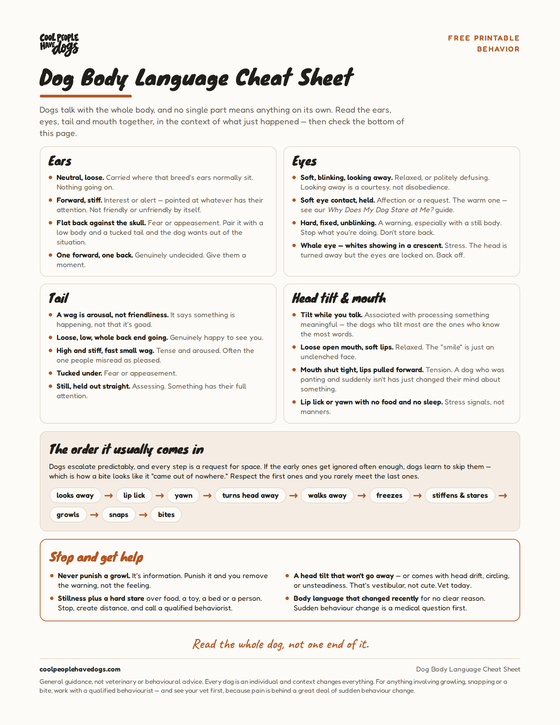
Grab the free Dog Body Language Cheat Sheet.
One printable page covering head tilts, ears, tail position, and eyes — a quick reference for what your dog's body is actually telling you.